
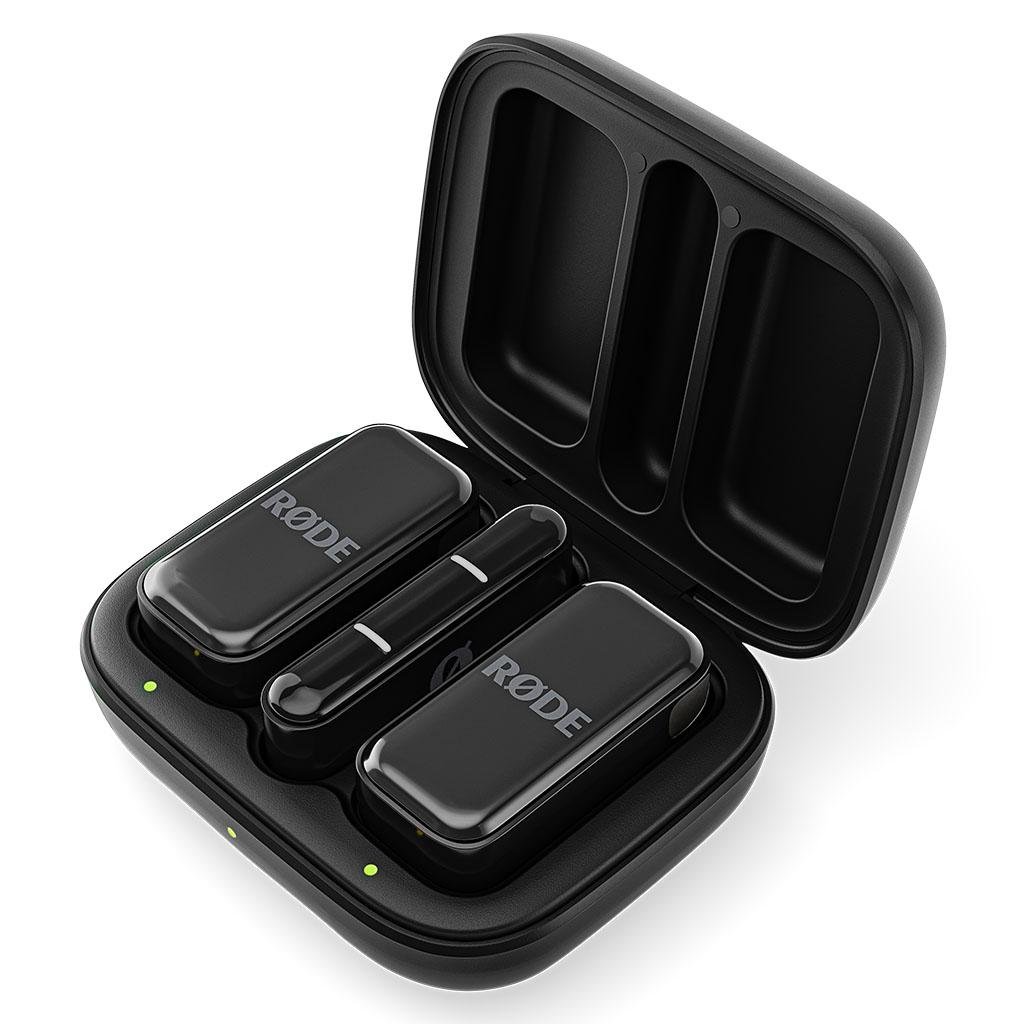
RØDE Wireless Micro
As an Amazon Associate I earn from qualifying purchases.
Make Every Word Count with the RØDE Wireless Micro
Great video content isn’t just about what people see. What they hear matters just as much.
You might have a beautifully filmed demonstration, a thoughtful interview or an interesting story to share, but if your voice sounds distant, muffled or overwhelmed by background noise, the message can easily get lost.
The RØDE Wireless Micro is designed to make capturing clear spoken audio considerably more convenient.
With two tiny wireless microphones, a receiver that connects directly to a compatible smartphone and a pocket-sized charging case, it offers content creators a straightforward way to improve their recordings without carrying a bag full of audio equipment.
Whether you’re making YouTube videos, recording interviews, demonstrating products or creating social media content, the Wireless Micro makes it easier to concentrate on what you want to say rather than how you’re going to record it.
Two Tiny Microphones, Plenty of Possibilities
One of the most appealing things about the RØDE Wireless Micro is that the standard kit includes two wireless transmitters.
Each transmitter has its own built-in microphone, allowing two people to be recorded simultaneously using the compatible receiver and recording application.
That opens up several useful possibilities.
A content creator can wear one microphone while a guest wears the other, making it easier to record conversations without passing a handheld microphone backwards and forwards.
Someone filming a product demonstration can clip a transmitter to their clothing and move naturally while explaining what they’re doing.
For travel videos, interviews and everyday vlogging, the small design helps keep the equipment discreet.
The transmitters have integrated clips and magnetic attachments, allowing them to be secured to suitable clothing without requiring an external lavalier microphone.
Their smooth, rounded bodies and compact dimensions also help them blend into a filming setup rather than becoming the most noticeable thing in the shot.
It’s a practical arrangement for anyone who wants their recordings to feel natural and uncluttered.
Connect Directly to Your Smartphone
A complicated recording setup can easily interrupt a good creative idea.
The Wireless Micro takes a simpler approach.
Its compact receiver connects directly to the USB-C port of a compatible smartphone, without requiring a separate connecting cable.
The microphones are designed to pair automatically, reducing the amount of preparation needed before recording.
For creators who regularly film on their phones, this is particularly attractive.
There’s no need to set up a large audio interface or position a microphone on a desk. You can attach the transmitters, connect the receiver and begin recording with a compatible application.
That makes the system suitable for spontaneous videos, interviews away from home and demonstrations where setting up conventional recording equipment would be inconvenient.
It can also complement a dedicated webcam or desktop filming arrangement.
For example, our Insta360 Link 2 4K Webcam article explores another way to create more polished video content, particularly for people who record presentations and demonstrations from their desks.
The RØDE takes a different approach, focusing on capturing voices close to the people speaking.
Intelligent GainAssist Helps Manage Audio Levels
One of the more useful features of the Wireless Micro is RØDE’s GainAssist technology.
When recording speech, volume levels can change surprisingly quickly.
Someone may begin speaking quietly, become more animated during an explanation or turn their head while talking.
Without suitable level control, louder moments can overload a recording while quieter passages become difficult to hear.
GainAssist is designed to manage microphone levels automatically, reducing the amount of manual adjustment needed.
This is particularly useful for people who want to concentrate on their content rather than constantly watching audio meters.
For interviews, demonstrations and casual filming, automatic level management can make the recording process more approachable.
The system uses omnidirectional microphones, allowing sound to be picked up from different directions around each transmitter.
With the microphones attached appropriately to clothing, the close position helps capture speech without relying entirely on the smartphone’s built-in microphone.
The result is a recording arrangement designed around convenience and understandable dialogue.
Clearer Speech When Recording Outdoors
Recording outside introduces challenges that aren’t always obvious until you listen back to the footage.
Even a gentle breeze can create unwanted rumbling against a microphone.
RØDE has designed the Wireless Micro transmitters with acoustic chambers intended to help reduce wind interference and plosive sounds.
The package also includes two furry windshields for additional protection when filming outdoors.
These small accessories are particularly useful for walking videos, travel content and outdoor interviews.
They fit over the transmitters, helping reduce the direct impact of moving air on the microphones.
For someone recording in a garden, park or busy outdoor location, being able to add wind protection without changing the entire recording setup is a welcome convenience.
The microphones’ compact construction also means they can be carried easily between indoor and outdoor filming sessions.
While no small microphone system can eliminate every environmental distraction, the combination of close microphone placement and wind protection gives creators practical tools for improving their recordings.
A Charging Case Made for Life on the Move
Portable equipment becomes much more useful when it’s easy to keep charged and organised.
The RØDE Wireless Micro includes a compact charging case that stores both transmitters together.
Each transmitter offers up to seven hours of operating time under the manufacturer’s stated conditions.
The charging case provides two additional full charges, increasing the total available use to as much as 21 hours before the case itself needs recharging.
That’s a particularly attractive feature for creators who film throughout the day.
You might record several demonstrations, take a break, return the microphones to their case and have them ready for another session later.
The case helps protect the small components during transport and reduces the likelihood of leaving a transmitter loose in a bag.
Its pocket-friendly dimensions also make it easier to carry than a conventional microphone system with separate batteries, cables and accessories.
For regular content creators, having the entire audio setup stored in one compact case can make preparation feel considerably less demanding.
Build a More Comfortable Recording Space
Audio equipment works best when it fits naturally into the rest of a filming environment.
The RØDE Wireless Micro allows users to avoid having a large microphone and supporting arm positioned directly in front of them.
This can be especially useful when demonstrating products on a desk or recording videos where the speaker needs freedom to move.
Instead of arranging the entire scene around a fixed microphone, the microphone travels with the person speaking.
That leaves more room for cameras, lighting and the products being demonstrated.
For anyone creating content from a home office, our BenQ ScreenBar Halo 2 Monitor Light article explores another practical addition to a well-organised workspace.
Although the two products serve very different purposes, both help make a workspace more suitable for everyday creative tasks.
The Wireless Micro is especially appealing when you want your voice to remain close to the microphone while you move around the recording area.
Useful Software Without an Elaborate Setup
RØDE provides companion applications for its wireless recording equipment.
The Wireless Micro supports RØDE Central for compatible device management and settings, along with recording applications that accept its USB audio connection.
RØDE Capture provides additional video-recording functionality for supported Apple devices.
This offers flexibility for creators who want more control without building a complicated recording system.
The standard USB-C receiver can also operate as a compatible USB audio device with supported computers, making it useful beyond smartphone filming.
For example, someone creating spoken tutorials or recording interviews from a laptop may appreciate being able to reuse their compact microphone system.
However, individual software features and connection options depend on the device and application being used.
For creators interested in organising other parts of their digital workflow, our Elgato Stream Deck Neo article explores a compact controller designed to simplify frequently repeated computer tasks.
Together, thoughtfully chosen recording equipment and practical desktop controls can make content creation feel more manageable.
The Drawbacks
The RØDE Wireless Micro offers an attractive combination of portability and convenience, but there are several practical limitations worth understanding before choosing it.
Smartphone Compatibility Needs Checking
The standard Wireless Micro is primarily designed around smartphone recording.
The USB-C version requires a suitable device and compatible recording software.
Although many modern Android phones and newer iPhones use USB-C connections, that doesn’t automatically guarantee every device or application will work in exactly the same way.
RØDE specifies Android 11 or later for its USB-C Android compatibility, while compatible Apple devices have their own requirements.
Older iPhones using Lightning connections may require the separate Lightning version.
Buyers should check their phone’s connector and supported operating system before ordering.
Choosing the wrong connection type can make an otherwise convenient microphone system unnecessarily frustrating.
It Isn’t the Same as a Dedicated Camera Microphone Kit
The standard Wireless Micro package includes a smartphone receiver.
It doesn’t include the separate camera receiver supplied with RØDE’s Wireless Micro Camera Kit.
This distinction matters for anyone who regularly uses a mirrorless camera, DSLR or other dedicated filming equipment.
The standard USB-C receiver isn’t a direct substitute for a conventional 3.5mm camera microphone connection.
Some additional equipment or a different RØDE system may be necessary for particular camera arrangements.
For someone who primarily films with a smartphone, this limitation may not matter.
However, buyers planning to move between several types of recording equipment should check compatibility carefully.
No Built-In Recording on the Transmitters
The Wireless Micro transmitters send audio wirelessly to the receiver.
They do not provide independent onboard recording that automatically saves a backup inside each microphone.
That means the main recording depends on the receiver connection and the recording device functioning correctly.
If the wireless connection is interrupted or the smartphone application fails to capture the audio, the system doesn’t provide a separate internal recording to recover.
For casual videos, this may be an acceptable compromise.
For important interviews or situations where a recording cannot easily be repeated, a separate backup recording arrangement may be preferable.
Wireless Range Has Real-World Limits
RØDE specifies a transmission range of more than 100 metres under suitable conditions.
That’s a useful figure, but it should not be interpreted as a guaranteed distance in every environment.
Wireless performance can be affected by walls, obstacles, interference and the position of the transmitters relative to the receiver.
A microphone hidden behind the body or positioned around several obstructions may not perform like one operating in a clear, open space.
For most ordinary smartphone videos, the person recording is likely to remain much closer than the maximum specified range.
However, creators planning long-distance filming should test their setup before relying on it for important recordings.
Automatic Audio Control Isn’t a Cure for Every Sound Problem
GainAssist is designed to manage recording levels, but automatic processing cannot eliminate every acoustic problem.
A highly reflective room may still introduce echo.
Heavy traffic, machinery or multiple nearby conversations can still interfere with speech.
Because the microphones use an omnidirectional pickup pattern, they can capture surrounding sound as well as the speaker’s voice.
Positioning the microphone close to the person talking remains important.
The technology helps simplify recording, but it cannot transform an unsuitable recording environment into a completely controlled studio.
Creators who regularly record in difficult acoustic conditions may still need to pay attention to room treatment, positioning and background activity.
Wind Protection Adds a Little Bulk
The transmitters have an understated appearance when used on their own.
However, the additional furry windshields are visibly larger than the integrated microphone housings.
When fitted, they can become more noticeable on clothing.
This isn’t necessarily a problem for travel videos or casual outdoor interviews, where practical audio recording is the priority.
For a carefully styled presentation or formal interview, some creators may prefer a more concealed microphone arrangement.
There is also the small inconvenience of fitting and removing the windshields when moving between recording locations.
It’s a reasonable trade-off for additional wind protection, but it’s still worth considering.
The Small Components Are Easy to Misplace
Compact equipment is convenient to carry, but small accessories require organisation.
The Wireless Micro includes two transmitters, a receiver, magnetic attachments and removable windshields.
Any of these smaller components could be misplaced if left loose on a desk or in a camera bag.
The charging case helps keep the transmitters organised, but not every accessory has its own dedicated storage compartment.
The magnets also need to be handled carefully during attachment and removal.
For creators who regularly pack equipment away quickly, developing a consistent storage routine is sensible.
Losing a receiver or essential attachment could interrupt an otherwise straightforward filming session.
Clothing Placement Can Affect the Recording
Clip-on microphones offer freedom of movement, but their position matters.
If a transmitter is attached too close to loose fabric, scarves or jewellery, movement may create unwanted rubbing sounds.
Thick clothing can also make certain mounting positions awkward.
The included magnetic attachments provide alternatives to the built-in clips, but finding a comfortable and secure position may take some experimentation.
A microphone that looks discreet isn’t necessarily positioned correctly for the best speech capture.
For important recordings, it’s worth making a short test clip and listening for clothing noise before beginning.
Battery Life Is Limited Between Charges
Up to seven hours per transmitter is useful for typical filming sessions, but it isn’t unlimited.
Long events, continuous interviews or extended recording days may require charging breaks.
The advertised 21-hour total includes the additional charges supplied by the case rather than one uninterrupted 21-hour recording session.
You also need to keep the charging case itself charged.
If the case battery is empty, returning the microphones to it won’t provide the usual additional operating time until the case is recharged.
For most casual creators this arrangement is convenient, but people recording lengthy events should plan their power needs carefully.
There Are Fewer Hands-On Controls Than Larger Systems
The Wireless Micro prioritises simplicity.
That is attractive for beginners and smartphone creators, but it means there are fewer physical controls than on more elaborate wireless microphone systems.
Users who want extensive onboard monitoring, a dedicated receiver display or detailed adjustment directly from their equipment may prefer a larger recording system.
Some adjustments are handled through compatible software instead.
This keeps the transmitters tiny and uncomplicated, but it won’t suit everyone.
The Wireless Micro makes the most sense when quick operation, portability and straightforward spoken-word recording are more important than extensive manual audio control.
Who the RØDE Wireless Micro Suits Best
The RØDE Wireless Micro is particularly appealing to people who regularly create videos using their smartphones.
YouTube creators, vloggers, interviewers, online educators and small business owners can all benefit from a simple way to capture spoken audio without setting up conventional microphones.
It’s especially useful for people who demonstrate products, record conversations or move around while filming.
Having two transmitters included also makes it an attractive option for creators who occasionally work with a guest or recording partner.
The compact charging case and automatic pairing are valuable for anyone who wants to spend more time making content and less time preparing equipment.
For more ideas on improving a modern creative workspace, explore our Audio, Computing & Entertainment guides.
The Wireless Micro is most naturally suited to creators who value portability, straightforward operation and a recording setup that can accompany them wherever their next idea takes them.
More Freedom to Create
One of the pleasures of smartphone content creation is being able to record something interesting without assembling a complicated collection of equipment.
The RØDE Wireless Micro builds on that convenience.
Its two compact microphones, direct smartphone connection, intelligent audio-level management and portable charging case are all designed to make recording spoken content more accessible.
Instead of worrying about keeping a phone close enough to capture your voice, you can position the microphone on your clothing and concentrate on your message.
That freedom is especially useful when demonstrating products, filming away from a desk or recording conversations with another person.
For someone building a practical, portable content-creation setup, the Wireless Micro offers an appealing way to give audio the attention it deserves while keeping the equipment pleasantly simple.
As an Amazon Associate I earn from qualifying purchases.