
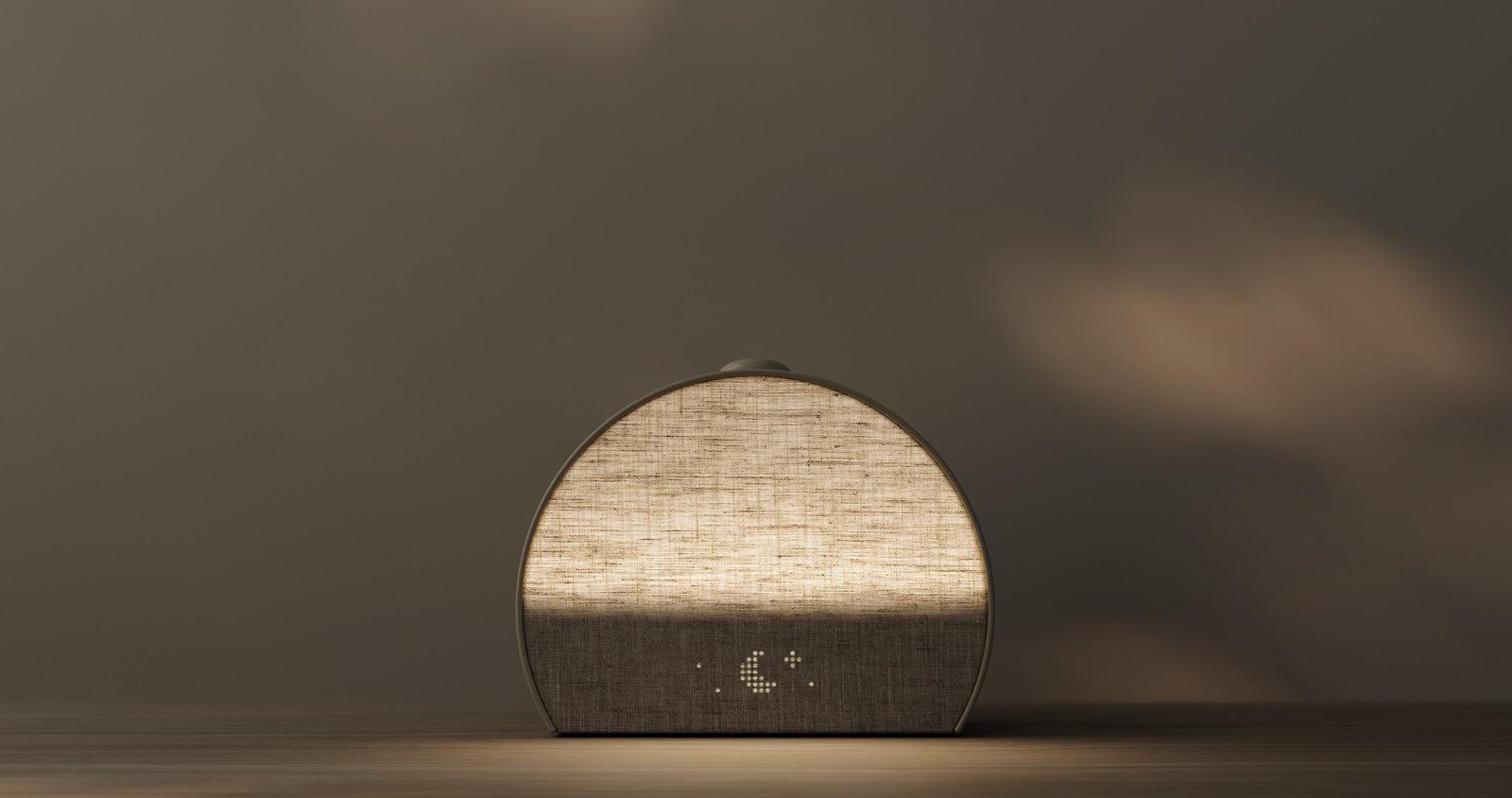
Hatch Sleep Clock Contactless Sleep Tracker
As an Amazon Associate I earn from qualifying purchases.
Most sleep trackers ask you to wear something. The Hatch Sleep Clock takes a different approach, sitting quietly on your bedside table while monitoring breathing movements and nighttime rest without touching your body.
Finished in soft Greige with a fabric-covered front, it looks more like a carefully chosen bedroom accessory than a piece of monitoring equipment. Alongside sleep tracking, it offers calming sounds, gentle lighting, bedtime routines and a sunrise alarm.
The interesting question is whether these features genuinely suit your sleeping arrangements. The technology is clever, but placement, connectivity and realistic expectations matter considerably.
What You Should Know Before Buying
Contactless tracking is convenient, but positioning matters
The Hatch Sleep Clock uses a low-power motion sensor to detect subtle chest movements associated with breathing.
It estimates when you fall asleep, wake up and move through different sleep stages, including light, deep and REM sleep.
There is no wristband to wear, ring to charge or sensor to attach to your mattress.
However, the device cannot simply be placed anywhere in the bedroom.
Hatch recommends positioning it approximately at mattress height, ideally two to four feet from your sleeping position, with the sensor pointing directly toward your chest.
Furniture, an awkward bedside layout or an obstructed sensor can reduce tracking reliability.
A low bedside cabinet may require raising the clock, while a crowded nightstand could make finding the correct angle difficult.
These practical details matter more than the attractive appearance suggests.
Sleep measurements are estimates, not medical findings
Hatch cites 97% sleep-detection accuracy for the underlying sensing technology when compared with clinical polysomnography.
That figure should not be interpreted as a guarantee that every sleep stage will be classified correctly.
The clock estimates sleep patterns from breathing and movement. It does not measure heart rate, heart-rate variability or blood oxygen.
Nor does it diagnose sleep apnea, insomnia or other medical conditions.
Unusual movements, restless nights and changes in normal sleeping behaviour can affect the information collected.
Hatch also explains that the initial calibration period takes approximately seven nights. Personalised insights become more useful as the system learns your routine.
Anyone expecting perfectly accurate measurements from the first morning may be disappointed.
For a different approach, our guide to sleep tracking with a smartwatch explores how wearable technology can fit into everyday wellness routines.
Sharing a bed introduces another complication
The sensor is designed to monitor one primary sleeper.
When two people share a bed, Hatch aims to identify the person closest to the device. However, the position of both sleepers can influence the measurements.
A partner moving closer during the night may affect tracking.
Pets sleeping on or near the bed can also introduce additional movement.
This makes the clock more straightforward for someone sleeping alone or occupying a consistent side of the mattress.
Couples expecting one device to produce two independent sets of sleep data should understand that it cannot do so.
The subscription is optional, but not irrelevant
One reassuring feature is that the basic contactless tracking, sleep insights and personalised recommendations do not require Hatch+.
The device also includes a selection of sounds and sunrise alarm options without ongoing membership.
However, Hatch+ provides access to a much larger library of sleep-focused audio, including additional meditations, stories, soundscapes and alarm content.
A trial is included, but the expanded library requires a subscription afterward.
If you enjoy discovering different guided sessions every evening, that distinction may matter.
Conversely, anyone content with basic sleep sounds and a familiar bedtime routine may find the included features sufficient.
The important point is understanding exactly which experiences remain available without membership.
The sunrise alarm offers a gentler morning routine
Rather than relying entirely on an abrupt alarm sound, the Hatch gradually increases its illumination to imitate the colours of sunrise.
You can customise the timing, light and accompanying sounds through the Hatch Sleep app.
This could be particularly appealing during darker mornings or in bedrooms with limited natural daylight.
The warm illumination also gives the device a useful role as a bedside light.
However, a sunrise alarm cannot guarantee an easier awakening. Sleep schedules, individual light sensitivity and room conditions all influence the experience.
People who sleep through ordinary alarms may still require a separate backup.
For households interested in controlling natural bedroom light, our SwitchBot Blind Tilt feature explores another way to manage daylight through compatible window blinds.
Wi-Fi and smartphone setup are required
Although the clock supports physical bedside controls, initial configuration relies on the Hatch Sleep app.
A compatible smartphone and Wi-Fi connection are required to establish and customise the experience.
Through the app, users configure bedtime routines, alarm settings and sleep-tracking preferences.
That makes the device more involved than an ordinary alarm clock.
Someone who dislikes connected devices, accounts or occasional firmware updates may find the additional complexity unnecessary.
The clock also is not designed to operate as a conventional Bluetooth speaker for playing arbitrary audio from your phone.
Its emphasis is on Hatch’s own sleep content and routines.
Privacy deserves consideration
Unlike a camera-based monitoring system, the Sleep Clock does not contain a camera or microphone for recording nighttime activity.
Its sensor detects breathing-related movements rather than capturing images or conversations.
That is a meaningful distinction for anyone uncomfortable with recording equipment in a bedroom.
Nevertheless, sleep patterns are personal information, and using the connected app involves entrusting data to the manufacturer’s service.
Another detail worth knowing is that Hatch says the motion sensor cannot currently be switched off through the app.
Pointing the device away from the bed prevents it from monitoring your sleeping position, but that is different from having a dedicated sensor-off control.
Anyone wanting complete control over sensor activation should consider this limitation carefully.
Bedroom comfort involves more than sleep data
The Greige finish is especially attractive in a softly furnished bedroom. Its muted colour and textured-looking front provide a calmer appearance than glossy black electronics.
It should sit comfortably beside pale timber, linen bedding and warmer neutral interiors.
However, its position must prioritise accurate sensing rather than decoration alone.
The bedroom environment matters too.
Poor air quality, disturbing background noise and uncomfortable temperatures may influence how restful a room feels, regardless of what the clock reports.
Our LEVOIT Core 400S-P Smart Air Purifier feature explores a separate approach to managing airborne particles in bedrooms and living spaces.
Neither device replaces sensible ventilation or professional guidance when genuine health concerns arise.
Who Should Probably Avoid This Product?
People wanting medical-grade diagnosis or detailed physiological measurements should choose equipment specifically intended for those purposes.
Couples seeking separate tracking for both partners will also find the single-sleeper limitation restrictive.
Bedrooms without reliable Wi-Fi, suitable bedside positioning or adequate space around the clock may not provide the best experience.
Anyone opposed to smartphone configuration, connected services or an always-active motion sensor should think carefully before buying.
If you simply need an ordinary alarm clock, the tracking and personalised recommendations may be unnecessary.
Who Will Benefit Most?
The Hatch Sleep Clock makes the most sense for someone who wants to understand their sleeping habits without wearing another device.
It is particularly appealing to people who dislike sleeping with a smartwatch or ring but still appreciate information about their nighttime routines.
Its combination of gentle lighting, relaxing sounds and personalised recommendations also gives it a wider purpose than tracking alone.
For a carefully arranged bedroom, the soft Greige finish is another attraction. It offers useful technology without dominating the bedside table visually.
Explore our Smart Home & Security guides for more connected products designed around everyday comfort and convenience.
The Hatch Sleep Clock brings together thoughtful design and an unusual approach to sleep monitoring. Its appeal lies in making nighttime tracking less intrusive while encouraging more consistent routines.
Position it carefully, allow time for calibration and treat its measurements as helpful patterns rather than absolute answers. With those expectations, it offers an interesting way to make bedtime technology feel a little more natural.
As an Amazon Associate I earn from qualifying purchases.
Opens Amazon (paid link)