
Let the Lawn Water Itself
As an Amazon Associate, we may earn from qualifying purchases. This comes at no extra cost to you and helps support our website.
The Chore That’s Easy to Forget Until It’s Too Late
Watering the lawn seems like one of those simple tasks that shouldn’t require much thought. Turn the hose on, let it run, turn it off. In practice, though, it’s one of those chores that quietly falls apart the moment life gets busy. You mean to water before work but run late. You remember at 9pm and decide it can wait until morning. A weekend trip comes up and the lawn just has to fend for itself for a few days.
None of this is a big deal in isolation, but the pattern adds up. Grass and garden beds end up inconsistently watered — sometimes too little, sometimes too much when someone overcorrects after forgetting for a few days. A smart watering system exists specifically to smooth out that inconsistency, handling the actual watering so it stops depending on someone remembering to do it at the right time.
Taking the Guesswork Out of When to Water
Most people water on a rough mental schedule: a couple of times a week, maybe more if it’s been hot, less if it rained recently. That system works fine until it doesn’t — like watering right after a storm because nobody thought to check, or letting things go dry during a stretch of unexpectedly warm days.
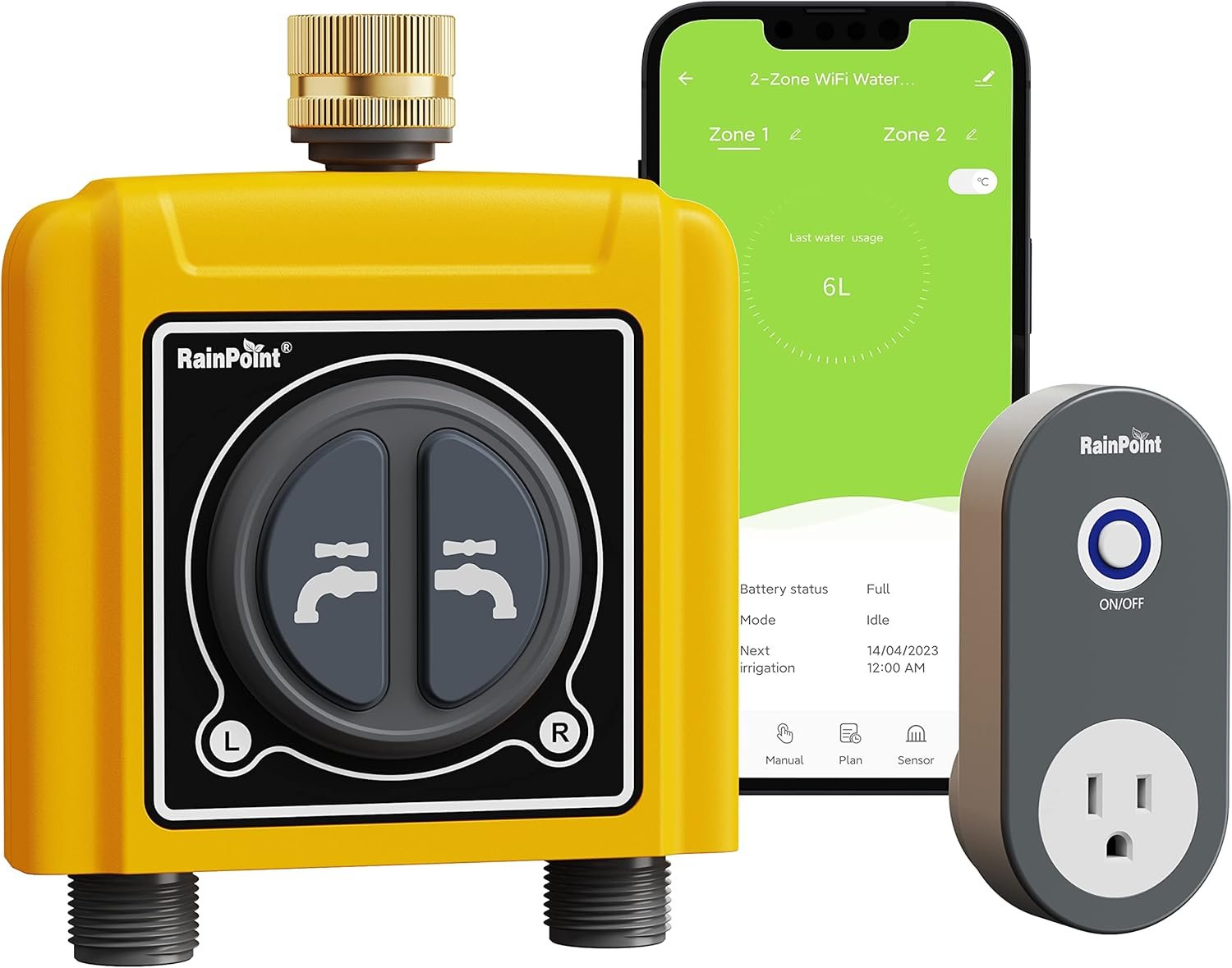
This is where weather-based irrigation makes a genuine difference. Instead of running on a fixed schedule regardless of conditions, a wifi sprinkler controller like this one can factor in local weather and skip watering when it isn’t needed. If rain is already covering it, the system holds off. There’s also the option to set a manual rain delay for a day or two after a storm, which solves the very specific annoyance of a sprinkler kicking on over already-soggy ground.
It’s a small adjustment, but it removes a decision that a lot of people either forget to make or don’t have time to think about on a daily basis.
Watering by Amount, Not Just by Time
Time-based watering is the default most people are used to — run the sprinkler for twenty minutes, three times a week. But different areas of a yard often need different amounts of water, and a flat time-based schedule doesn’t account for that. A built-in flow meter that tracks watering in actual gallons or liters, rather than just minutes, allows for a more precise approach based on what a specific zone or plant type actually needs, and keeps a record of usage over roughly the past ten days so patterns are easy to look back on.
For anyone who’s ever wondered whether they’re overwatering the flower beds while underwatering the lawn, having that kind of quantity-based data available turns a guess into something closer to an informed decision.
Managing Two Zones Without Micromanaging Either
Most yards aren’t uniform. A front lawn might need a different watering routine than a vegetable garden out back, and a shaded flower bed usually needs less than a sun-exposed strip along a driveway. Handling that manually usually means remembering to adjust hose placement, timing, and duration separately for each area — which, realistically, tends to fall by the wayside once the season gets busy.
With two independent zones and the ability to set several different schedules across them, a system like this lets each area follow its own routine without requiring separate attention every single day. Once the schedules are set up, the two zones simply run according to their own logic — one might water briefly every other morning, while another runs longer but less frequently — without needing to be reconfigured each week.
Peace of Mind While You’re Away
Vacations and business trips tend to bring a small but real source of stress for anyone with a yard or garden: what happens to it while nobody’s home. Asking a neighbor to swing by and water things is a common workaround, but it relies on someone else remembering, having time, and actually following through consistently for however many days you’re gone.
An automatic sprinkler timer removes that dependency entirely. Once schedules are set, watering continues on its own regardless of who’s home. For longer trips, checking in through the app provides a way to confirm everything’s running as expected, and adjustments can be made remotely if weather conditions change unexpectedly while you’re away. It’s a small thing, but it’s one less item to coordinate before heading out the door with suitcases in hand.
A Practical Fit for Soil That Needs More Than Guesswork
Some yards have consistent, predictable soil that behaves the same way season after season. Others don’t — dealing with patches that drain quickly, areas that stay damp longer, or soil composition that varies across the property. For situations like that, pairing the system with a soil moisture sensor allows watering decisions to be based on actual conditions in the ground rather than an assumed schedule.
This tends to matter most for anyone dealing with a garden that’s a little more particular — vegetable beds, new sod, or plants sensitive to over- or under-watering. Rather than adjusting the schedule based on trial and error, the system can respond to what the soil is actually reporting.
Voice Control and the Small Everyday Conveniences
Beyond scheduling, there’s something to be said for the simple convenience of manual control that doesn’t require walking outside to turn a hose bib. Whether it’s through the app, the button on the timer itself, or a quick voice command to Alexa or Google Assistant, being able to turn watering on for a specific zone from the kitchen or the couch fits neatly into how a lot of smart homes already operate.
It’s not a dramatic feature, but it’s the kind of small convenience that tends to get used more often than people expect once it’s available — watering a specific bed for a few extra minutes without a special trip outside, or double-checking that the sprinklers actually ran this morning before heading to work.
Built for Outdoor Use Without Overcomplicating Things
Because this kind of device lives outside, attached to a spigot through most of the growing season, durability matters more than it might for an indoor gadget. A brass inlet and outlet are specifically meant to hold up against the wear that comes from constant outdoor exposure and regular water flow, reducing the chances of leaks developing at the connection points over time. For anyone who’s dealt with a cheaper plastic timer cracking or leaking after a season outside, that kind of build detail tends to matter more in practice than it sounds like on paper.
Setup itself stays fairly straightforward, connecting to a home’s 2.4GHz WiFi network and pairing with the app, which means most people can get a couple of zones running without needing any specialized tools or professional installation.
Where This Fits Into Everyday Life
For a family trying to keep a lawn presentable without adding another daily chore to the list, for someone with a garden that needs more nuanced care than a basic timer allows, or for anyone who travels often and wants to stop relying on neighbors for watering favors, a smart watering system tends to solve a similar underlying problem: making consistent outdoor care possible without requiring consistent daily attention.
It won’t turn a struggling lawn into a golf green overnight, and it isn’t a substitute for basic yard maintenance like mowing or fertilizing. What it does offer is a more reliable, weather-aware way to handle one specific task that’s easy to get right occasionally and much harder to get right consistently, week after week, all season long.
Check It Out!