
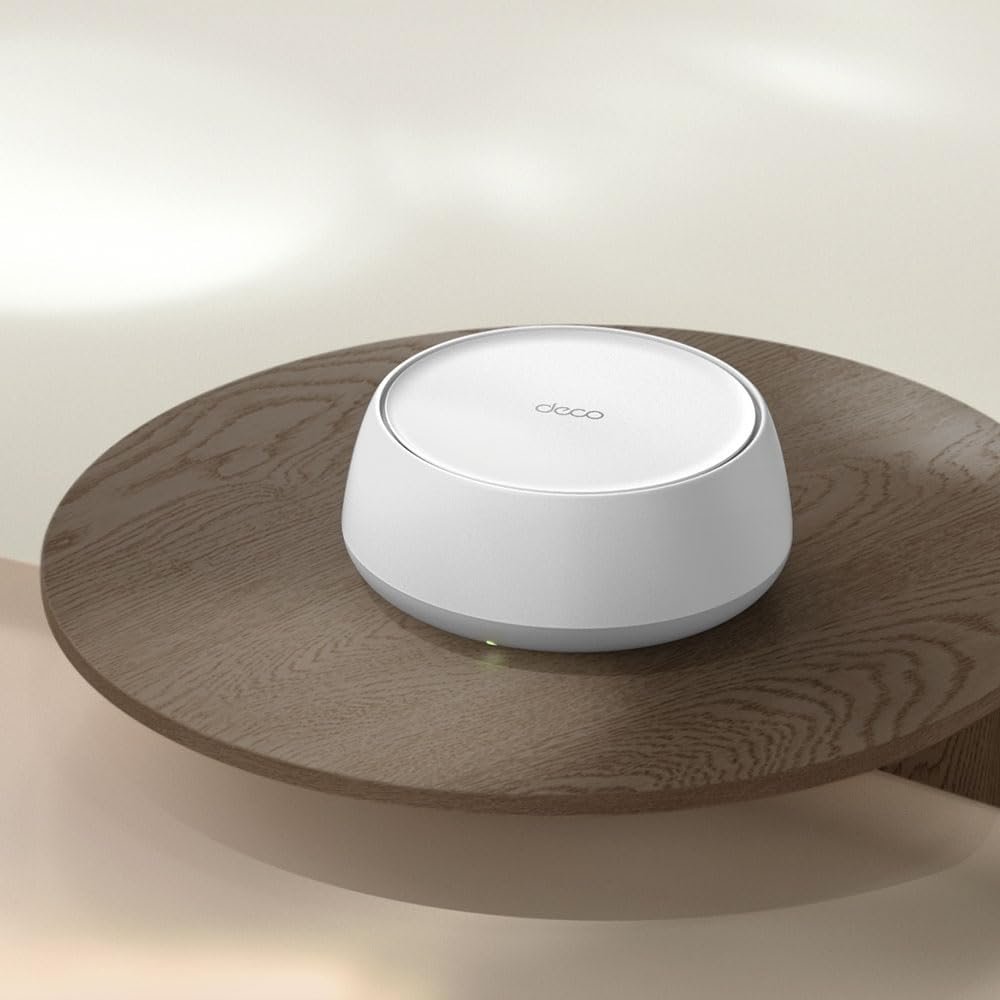
Making Every Room Feel Connected
The Room You Avoid Because Of The WiFi
Most Homes Have One Spot That Never Quite Works Properly
As an Amazon Associate, I earn from qualifying purchases.
It might be the upstairs bedroom.
The spare room that’s become a home office.
The kitchen corner where video calls always seem to struggle.
Or perhaps the room furthest from the router where streaming a film somehow feels less reliable than everywhere else.
Most people know exactly which room it is.
What’s surprising is how often they simply accept it.
Instead of fixing the problem, they adjust their behaviour around it. Work happens elsewhere. Devices get moved. Certain activities are avoided in particular parts of the house.
The inconvenience becomes part of daily life.
Yet the modern home was never designed to revolve around the location of a WiFi router.
Technology should adapt to the way people live, not the other way around.
Why Home Life Has Changed Faster Than Home Networks
A decade ago, internet usage looked very different.
A few phones.
A laptop or desktop computer.
Occasional streaming.
That was often enough.
Today, connectivity touches almost every part of household life.
Many homes now depend on WiFi for:
- Remote work
- Streaming services
- Online learning
- Video calls
- Smart security systems
- Voice assistants
- Connected appliances
- Smart lighting
- Home automation
The network is no longer supporting a few devices.
It’s supporting lifestyles.
As demands increase, weaknesses that once went unnoticed begin appearing more regularly.
The Hidden Cost Of Weak Coverage
When people think about internet problems, they often focus on speed.
But weak coverage creates a different type of frustration.
It’s less dramatic.
More persistent.
A smart camera occasionally disconnects.
A film buffers unexpectedly.
A laptop struggles in one room but works perfectly in another.
A video meeting freezes at the wrong moment.
None of these issues feel major on their own.
Together, they slowly chip away at convenience.
Over time, even small interruptions become surprisingly annoying.
Tiny Frustrations Add Up
Many daily frustrations aren’t large enough to justify immediate action.
They’re simply repeated often enough to become irritating.
Reliable WiFi has a habit of eliminating dozens of these small annoyances at once.
The difference isn’t always obvious on day one.
But after a few weeks, many people realise they haven’t thought about their connection in quite some time.
Why Mesh WiFi Fits Modern Homes Better
Traditional routers do one thing very well.
They broadcast from a single location.
The challenge is that modern homes rarely revolve around a single location.
People move throughout the property.
Work happens in different rooms.
Entertainment happens in different spaces.
Smart devices operate everywhere.
Mesh networking approaches the problem differently.
Instead of relying on one point of coverage, multiple units work together as a single network.
The result is a more balanced experience throughout the home.
Not just in the room where the router happens to sit.
The Rise Of Flexible Living Spaces
Homes have become more adaptable than ever.
A guest bedroom may function as an office during the week.
The dining room might double as a study area.
The garden room could become a workspace on sunny afternoons.
Connectivity needs to support this flexibility.
People shouldn’t need to plan their day around signal strength.
Reliable coverage allows rooms to be used for their intended purpose rather than their proximity to networking equipment.
That freedom often becomes one of the most appreciated benefits.
Smart Homes Depend On Strong Foundations
Smart technology often arrives gradually.
A smart speaker today.
A video doorbell next month.
Smart lighting later.
Eventually, an entire ecosystem develops.
Each device contributes a small convenience.
Together, they create a home that feels more responsive and organised.
But all of them depend on a stable network.
Without consistent connectivity, smart devices become less reliable and less enjoyable to use.
For many households, the network quietly becomes the foundation beneath every smart feature.
A stronger foundation usually leads to a smoother experience overall.
Supporting Everyone At The Same Time
One of the challenges facing modern networks is that nobody uses the internet alone anymore.
A household might contain:
- Someone attending a video meeting
- Someone streaming television
- Someone gaming online
- Children using tablets
- Smart devices running automatically
All at the same time.
The goal isn’t simply handling these activities.
It’s handling them without anyone noticing.
When a network performs well, family members rarely discuss it.
Life simply carries on.
And that’s usually a sign that everything is working as intended.
A Better Environment For Working From Home
Remote work has permanently changed expectations around connectivity.
Reliable internet is now as important as a comfortable chair or a suitable desk.
People need confidence that meetings will remain stable and files will upload without interruption.
What’s interesting is that coverage often matters more than peak speed.
A moderately fast connection available everywhere is frequently more useful than an extremely fast connection available only in one room.
The flexibility to work where it’s comfortable rather than where the signal is strongest can make a meaningful difference throughout the week.
Peace Of Mind Isn’t Often Mentioned
Many technology discussions focus on specifications.
But everyday ownership tends to focus on experiences.
One experience that receives surprisingly little attention is peace of mind.
Knowing devices remain connected.
Knowing family members can stream, work, and communicate reliably.
Knowing smart security systems remain online.
Knowing you don’t need to constantly troubleshoot.
These benefits rarely appear in feature lists.
Yet they often become some of the most valuable parts of ownership.
Frequently Asked Questions
Is mesh WiFi only beneficial for large properties?
Not at all. Many medium-sized homes experience coverage inconsistencies that a mesh system can help address.
Can it support a growing number of smart devices?
Yes. Mesh networks are commonly used in homes that continue adding connected devices over time.
Does reliable coverage help remote working?
For many people, stable connectivity throughout the property creates a more flexible and productive working environment.
Will I need technical expertise to use it?
Most modern mesh systems are designed with user-friendly setup and management tools.
Can different family members use multiple devices simultaneously?
Yes. Modern home networks are designed to accommodate multiple users and connected devices at the same time.
Is stronger coverage more important than faster speeds?
In many households, consistent coverage and reliability have a greater impact on daily experience than speed alone.
A Practical Addition To Daily Life
Reliable WiFi rarely becomes a topic of conversation.
Nobody gathers around the dinner table to discuss a strong wireless signal.
What people notice instead is the absence of problems.
The meeting that stays connected.
The smart device that responds instantly.
The film that streams without interruption.
The room that finally works as well as every other room.
For households with growing numbers of devices, flexible working arrangements, smart home technology, or simply a desire for fewer daily frustrations, dependable whole-home connectivity often becomes one of those improvements that quietly earns its place.
Not because it changes everything.
Because it makes everything else work a little better.
Check It Out!