
A Cleaner Home Without the Effort
Amazon Associate Disclaimer: As an Amazon Associate, we may earn from qualifying purchases. This comes at no extra cost to you and helps support gizomoblog.com/.
When Cleaning Stops Being Something You Have to Remember
There’s a particular kind of mental clutter that comes from running a home. It’s not just the physical mess — it’s the running list in your head. Did I vacuum the hallway this week? Is there dog hair building up under the couch again? Should I do it now, or will it just get dirty again by tomorrow?
For a lot of people, cleaning isn’t hard. It’s just one more thing competing for attention in a day that’s already full. And it’s usually the task that gets pushed to “later” — until later turns into a Saturday morning spent catching up on something that could have been handled gradually, in the background, without anyone thinking about it at all.
That’s really the shift that smart cleaning tech offers. Not perfection. Not some dramatic before-and-after. Just one less thing sitting on your mental to-do list.
Mapping a Home the Way You Actually Live In It
Every home has its own rhythm — furniture that shifts, rugs that get rearranged, a dog bed that moves from the living room to the bedroom depending on the season. A cleaning routine that works has to be able to adjust to that, rather than expecting the house to stay frozen in one layout forever.
This is where home mapping technology quietly does a lot of heavy lifting. Using 360° LiDAR vision, a robot vacuum like this one builds a working picture of a home’s layout, adapting as things change day to day. It’s not memorizing a static floor plan — it’s continually reading the space it’s in, noticing furniture, doorways, and obstacles as they come up.
Practically speaking, this means less babysitting. You don’t have to clear a path before it runs, and you don’t come home to find it wedged under a chair leg, stuck and beeping. It moves through the home the way a person familiar with the layout would — methodically, without wasted passes, adjusting for whatever’s changed since the last clean.
The Kind of Clean That Happens Without a Schedule Reminder
Most people don’t actually enjoy the act of vacuuming. What they want is the result — a floor that feels clean underfoot, without dust bunnies gathering in corners or pet hair collecting near baseboards. The gap between those two things is usually where procrastination lives.
A structured cleaning pattern changes that gap. With Matrix Clean Navigation, the vacuum works through a room in a precise grid, taking multiple passes over trouble spots instead of just skimming the surface once. That means the areas that usually get missed in a quick once-over — corners, under furniture edges, high-traffic hallway strips — actually get attention.
For homes with pets, this matters more than it might seem. Pet hair doesn’t stay where it falls. It drifts, it clings to fabric, it settles into carpet fibers. A vacuum built with a self-cleaning brushroll and strong suction designed specifically for pet hair and dander means the burden of “staying on top of it” shifts away from you and onto something that’s built to handle exactly that job, every day, without needing a reminder.
The Small Chore Nobody Talks About: Emptying the Vacuum
Here’s an honest truth about most vacuums, robotic or not — the emptying part is often the actual barrier to using them consistently. It’s not glamorous, it’s a little dusty, and it’s easy to let a full bin sit for “just one more day,” which quietly turns into a week.
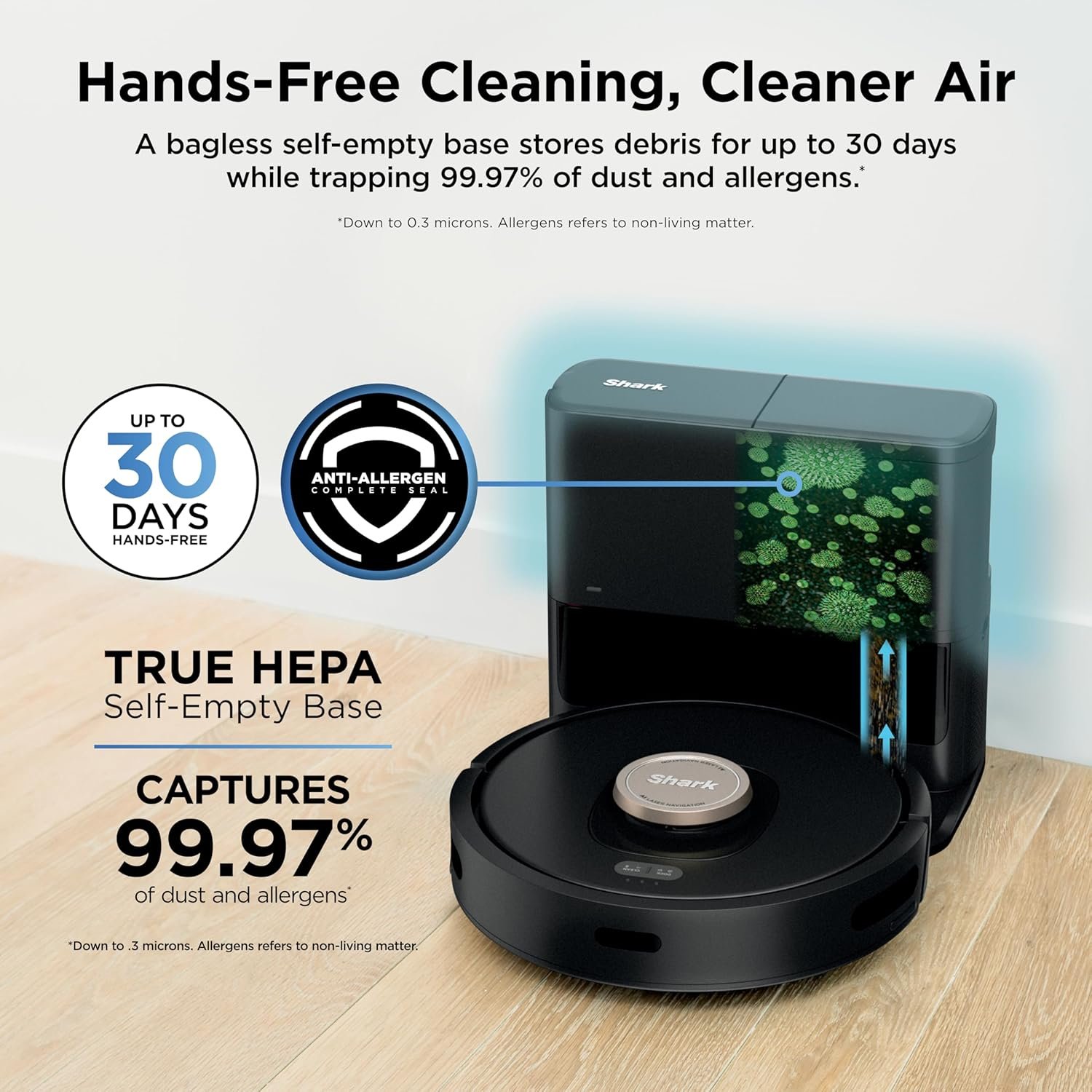
A bagless, self-emptying base changes that equation entirely. With a 60-day capacity, the base holds onto collected dirt and debris for up to two months before it needs attention. That’s not a small thing — it’s the difference between a chore that needs weekly maintenance and one that fades into the background of a normal month.
Combine that with true HEPA filtration capturing 99.97% of dust and allergens down to 0.3 microns, and the benefit isn’t just convenience — it’s air quality. For households with allergies, sensitive sinuses, or simply a preference for fresher-feeling air, trapping fine dust rather than recirculating it back into the room is a quiet but meaningful upgrade to daily comfort.
Letting Voice Do the Remembering for You
Life doesn’t always leave room to think about cleaning schedules in advance. Sometimes it’s a last-minute realization that guests are coming over in an hour. Sometimes it’s simply forgetting, until you’re already halfway out the door for work.
Voice control through Amazon Alexa or Google Assistant takes the planning pressure off. A quick spoken request can start a clean, activate a schedule, or set things in motion without needing to pull out a phone or remember an app exists. It fits into the same category as adjusting the thermostat by voice or asking for the weather — small, frictionless moments that add up to a home that responds to you rather than the other way around.
For anyone juggling a busy morning routine, or managing a home with kids underfoot, this hands-free approach means cleaning becomes something that happens around your day, not something that interrupts it.
Built for the Long Middle Stretch of a Cleaning Session
One of the more underrated aspects of a whole-home clean is simply having enough runtime to finish the job without needing a mid-task recharge and restart. With up to 120 minutes of runtime, there’s enough coverage for larger homes or multi-room cleaning sessions without constant interruption.
And when the battery does run low, Recharge and Resume means the vacuum returns to its dock, tops off, and picks up exactly where it left off — rather than starting over or leaving a section of the home unfinished. For anyone who’s dealt with older robotic cleaners that seemed to “forget” their progress, this kind of continuity is a meaningful quality-of-life improvement.
Finding a Place for It in a Real Home
None of this requires reorganizing a home or building a routine around the technology. The appeal is really the opposite — it slots into whatever routine already exists. Mornings stay the same. Evenings stay the same. The floors just happen to be cleaner without anyone having set aside time to make that happen.
For a household with pets, it means fewer stray hairs collecting in corners between deeper cleans. For a busy home office setup, it means less dust settling around desks and cords. For anyone who simply wants one less recurring task competing for attention during the week, it’s a way of outsourcing a chore that rarely feels rewarding to do by hand anyway.
Bringing It All Together
A smart, self-emptying robot vacuum isn’t about transforming a home overnight or turning cleaning into some kind of spectacle. It’s a quieter kind of convenience — the sort that shows up in small ways, like walking across a floor that feels cleaner than you remember making it, or realizing you haven’t thought about vacuuming in weeks because it simply hasn’t needed thinking about.
Different households will find different value in it. For some, it’s the allergen-trapping filtration that matters most. For others, it’s the pet hair pickup, or the voice control that fits into an already-packed morning. And for many, it’s simply the mental space that opens up when one more chore stops needing to be remembered.
Whatever the reason, the idea is the same — technology quietly doing a job in the background, so your actual time and attention can go toward the parts of home life that matter more.
Check It Out!