
A Calmer, Simpler Water Routine at Home
As an Amazon Associate I earn from qualifying purchases.
The Small Moments That Add Up in a Kitchen
Most kitchen routines aren’t built around big decisions. They’re built around dozens of small ones — filling the kettle, waiting for water to boil, digging through the fridge for a cold bottle, wondering if the tap water is actually worth drinking straight. None of these moments feel like a big deal on their own. But stacked together, day after day, they’re where a lot of quiet friction lives.
That’s the gap a countertop reverse osmosis system is designed to fill. Instead of adding another gadget to manage, it tends to remove a handful of small annoyances at once — which is really what makes a kitchen feel easier to live in.
Rethinking Where Water Fits Into the Day
Water shows up constantly throughout a normal day: that first glass in the morning, coffee or tea before anyone’s fully awake, a kettle for someone’s tea in the afternoon, water bottles before a walk, a pot for pasta at dinner. Each of these moments usually means a slightly different step — boiling, filtering with a pitcher, running the tap and waiting for it to get cold, or pulling out a separate hot water kettle.
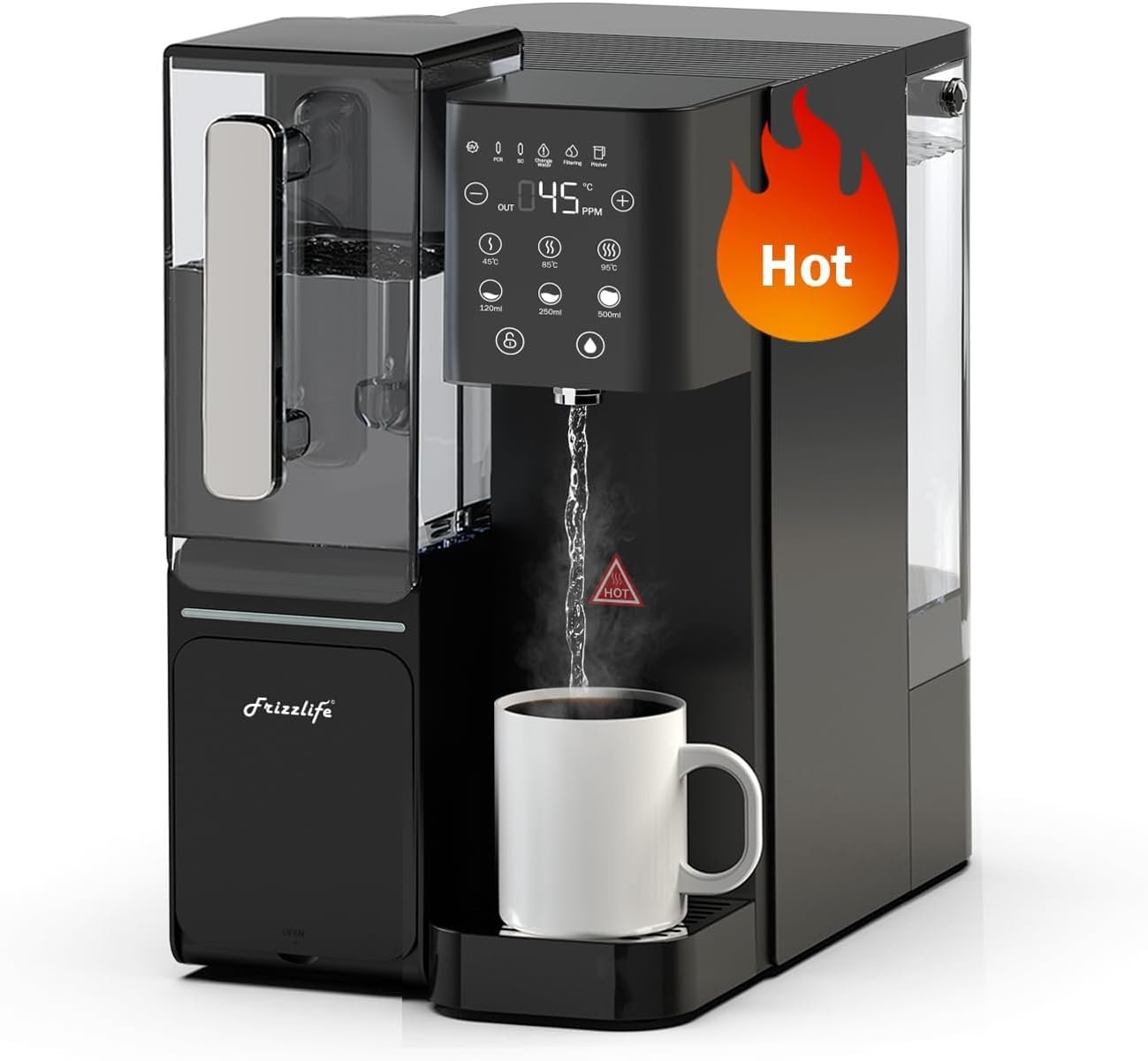
A countertop water filter system with a built-in hot water dispenser collapses a lot of that into one spot. Since the WB99-H heats water on demand between 45°C and 100°C, there’s no separate kettle to fill, watch, and clean. Tea steeps at the right temperature, coffee gets water hot enough to actually extract flavor, and baby formula can be mixed at a safer, more consistent temperature — all from the same small unit.
Less Guessing, More Trusting Your Tap
One of the more subtly stressful parts of relying on tap water is not really knowing what’s in it. Chlorine taste, hard water buildup, or just general uncertainty about contaminants can make people default to buying cases of bottled water instead — which comes with its own hassle of hauling, storing, and recycling.
The RO filtration in this system is built to reduce a wide range of common contaminants, including chlorine, fluoride, lead and other heavy metals, arsenic, and general dissolved solids, using a fine-filtration process paired with carbon and LED purification stages. For a household trying to cut down on bottled water without overhauling their plumbing, that’s a meaningful shift — the tap becomes something people actually reach for again.
There’s also a practical detail that matters more than it sounds like it should: the built-in TDS monitor shows a water quality reading after each use, and the system tracks filter life so replacements aren’t a guessing game. Instead of wondering “should I have changed that filter by now,” the system just tells you. It’s a small feature, but it’s the kind of thing that quietly removes mental clutter from a routine.
A Filter System That Doesn’t Ask for a Renovation
A common reason people put off improving their water setup is that “real” filtration usually means calling a plumber, drilling into a countertop, or committing to a permanent under-sink installation. That’s a lot of commitment for something that’s ultimately about convenience.
This system skips that step entirely. It’s designed to be plug-and-use, with no installation required — fill the tank, plug it in, and it starts producing filtered water. That makes it a realistic option for renters, apartments, or anyone who doesn’t want to make permanent changes to their kitchen. It also means it can move with you: onto a different counter, into a home office, or even packed up for an extended stay somewhere else, since the compact footprint (about 9 x 16.5 x 14.8 inches) doesn’t demand a dedicated corner of the kitchen.
The Pitcher: A Small Feature With a Bigger Payoff
It’s easy to overlook the included pitcher, but it ends up being one of the more useful parts of the daily routine. Rather than walking to the unit every time someone wants a drink, the pitcher can sit wherever it’s actually needed — on a table during dinner, in the fridge for cold water, or on a desk for a home office setup. It turns filtered water into something that’s simply available, rather than something you have to go get.
For households with kids, this kind of easy access matters more than it seems. A pitcher of cold, filtered water in the fridge door is far more likely to get used than a filter attached to a faucet across the kitchen. Convenience, more than anything, tends to be what makes a habit stick.
Alkaline Filtration and the Everyday Wellness Angle
Reverse osmosis is excellent at stripping out contaminants, but that same thoroughness can also lower the water’s mineral content and pH. The SC90 alkaline filter stage is built to offset that, restoring the water’s pH after filtration. For people who’ve made small wellness adjustments elsewhere — cutting back on soda, drinking more water throughout the day, paying more attention to what’s actually in their glass — this is a detail that lines up naturally with that mindset, without requiring any extra effort or a separate step.
How It Actually Changes a Morning
Picture an ordinary weekday morning: coffee needs to happen fast, someone’s filling a water bottle on their way out the door, and there’s no time to wait on a kettle. With adjustable dispensing volumes — 120ml, 250ml, 500ml, or continuous flow — the system can pour exactly what’s needed instead of overfilling a mug or underfilling a bottle. Hot water for coffee doesn’t require a separate appliance taking up counter space, and cold filtered water is already sitting in the pitcher from the night before.
None of this is dramatic. It’s just fewer steps, fewer things to wait on, and fewer decisions to make before the day has even started — which, in a kitchen, tends to be the whole point.
Working From Home and Staying Hydrated
For anyone working from a home office, the appeal shifts slightly. It’s less about the morning rush and more about not having to interrupt a focused stretch of work to walk to the kitchen, boil water, and wait around. Having a pitcher of filtered water within reach, or a hot water dispenser close enough for a midday tea, removes a small but real disruption from the day. It’s a minor thing on paper, but small friction removed repeatedly over a workday adds up to a noticeably smoother one.
Where It Fits, Realistically
This kind of system isn’t trying to replace a full home filtration setup, and it isn’t aiming to be the centerpiece of a kitchen. It’s better understood as a quiet upgrade to a routine that already exists — one that saves a few minutes here, skips a kettle there, and takes some of the guesswork out of what’s coming out of the tap.
For a household relying on bottled water out of habit, for a home office that needs quick access to hot and cold water without a kitchen trip, for parents wanting a more consistent way to prepare formula, or for anyone renting a space where permanent installation isn’t an option, a countertop system like this tends to earn its spot simply by being used often, not by being flashy.
At the end of the day, the goal isn’t to reinvent how a kitchen works. It’s to smooth out the parts of the day that already revolve around water — quietly, without asking for much in return.